
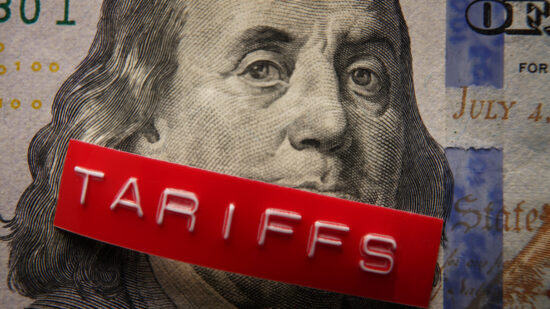
What tariffs remain in effect and are importers entitled to a refund?
These two questions are front of mind following the United States Supreme Court’s February 20, 2026 decision in Learning Resources, Inc. v. Trump. The decision held that the Trump Administration is not authorized to impose tariffs under the International Emergency Economic Powers Act (“IEEPA”). The 6-3 ruling has received a significant amount of media coverage on how it may represent a check on executive power in trade policy and a reaffirmation of Congress’s constitutional primacy over taxation. But what are the actual impacts of the decision?
The Tariffs at Issue – IEEPA
Shortly after taking office, President Trump declared national emergencies to address two threats: (1) the influx of illegal drugs from Canada, Mexico, and China, and (2) what he characterized as “large and persistent” trade deficits that had “led to the hollowing out” of American manufacturing. Invoking its authority under IEEPA, the Trump Administration imposed a 25% tariff on most Canadian and Mexican imports and a 10% duty on most Chinese imports to address drug trafficking, along with a minimum 10% reciprocal tariff “on all imports from all trading partners” to address trade deficits with dozens of nations facing even higher rates. Since imposing these initial tariffs, the Trump Administration has issued an array of modifications and shifted categories of goods into and out of the IEEPA tariff framework.
Congressional Power Over Taxation
Writing for the majority, Chief Justice Roberts grounded the decision in Congress’ taxing power “[t]o lay and collect Taxes, Duties, Imposts and Excises.” The Court emphasized that this taxing power was the “most important of the authorities proposed to be conferred upon the Union” and that the Framers gave Congress “alone . . . access to the pockets of the people.” Critically, the Trump Administration conceded it enjoyed no inherent constitutional authority to impose tariffs during peacetime, relying instead exclusively on IEEPA’s statutory language authorizing the President to “regulate . . . importation.” The Court found that these two words, separated by sixteen others in the statutory text, simply “cannot bear such weight” authorizing the executive branch to impose tariffs of an unlimited amount, for an unlimited duration on any product from any country.
Three members of the majority (Chief Justice Roberts, Justice Gorsuch, and Justice Barrett) applied the major questions doctrine to resolve the case. Under this interpretive framework, executive officials claiming an “extraordinary” delegated power must identify clear congressional authorization for it, particularly when the asserted authority has vast “economic and political significance.” The Court found several “telling indications” Congress never intended to delegate such sweeping tariff authority through IEEPA. When Congress has delegated tariff powers previously, it has done so explicitly using words like “duty,” and has imposed strict limits on amount, duration, and procedural prerequisites. Compared with these clear and limited delegations, the Court found IEEPA tariffs were “unbounded in scope, amount, and duration.”
The Dissent: Tariffs Are a Tool to Regulate Importation
Justice Kavanaugh, joined by Justices Thomas and Alito, authored a dissent arguing that statutory text, history, and precedent all authorized the Trump Administration to impose tariffs under IEEPA. The dissent cited to previous decisions relating to similar statutory language in emphasizing tariffs have traditionally been understood as a common means of regulating foreign commerce. The dissent argued the majority’s interpretation creates a “nonsensical” anomaly: under IEEPA, the President can impose complete embargoes or quotas blocking all imports from a country, but supposedly cannot take the “far more modest step” of conditioning those imports on payment of even a $1 tariff.
What’s Next? Alternative Tariffs and Refunds
The immediate practical consequences may not be as dramatic as they first appear. While the President’s ability to quickly apply “snap” tariffs have taken a blow, several other federal statutes which have been covered by this blog previously continue to authorize the Trump Administration to impose tariffs.
The Trump Administration has made it clear it will not quit on a tariff regime. Immediately after the decision was announced, the Trump Administration imposed a 10% and then 15% temporary import surcharge on most imports under Section 122 of the Trade Act of 1974 as a temporary bridge to maintain higher tariffs. Still, these tariffs are limited to 150 days and cannot exceed 15%. The Trump Administration also suspended duty-free de minimis treatment of cheap imports from all countries. The Trump Administration has options, but those options have more procedural hurdles and are more constrained.
- The $175 billion question – can you get a refund?
What is less clear is whether the Trump Administration will refund more than $175 billion in tariffs collected under IEEPA. Tariffs collected under IEEPA represent more than 50% of total customs duties collected since January 2025. As Justice Kavanaugh acknowledged in the dissent, the refund process is likely “going to be a mess.”
Moving forward, there have been no indications that refunds will be automatically disbursed. While unclear, entitlement to a refund will probably require following the typical refund claim process by filing a claim with the United States Court of International Trade (“CIT”), as many importers have done preemptively.
The current tariff refund process requires importers to file a protest if a liquidated entry is disputed. Liquidation occurs when the United States Customs and Border Protection (“CBP”) finalizes an entry and assesses duties. The assessment becomes conclusive if a timely protest isn’t filed. Importers should:
- Determine what entries have been liquidated up to this point by collecting and organizing entry summaries, duty payment records, and liquidation data for all entries on which IEEPA tariffs were paid;
- Keep track of when the entries are liquidating to ensure no protest deadlines are missed;
- Confirm an e-refund profile has been registered with the CBP to ensure a refund can be received; and
- File a correction and request a refund for overpayment if an entry has been assessed a tariff under IEEPA and not already liquidated.
Importers that were affected by IEEPA tariffs should consult with counsel to determine whether any action is necessary to preserve their right to obtain refunds. Downstream customers (like suppliers) should also consult with counsel regarding remedies available under their supply contracts, including potential refunds or price adjustments.